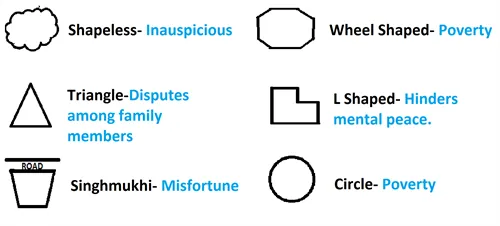
Introduction: Why Certain Plot Shapes Are Considered Auspicious
In Vastu Shastra, the shape of a plot is not judged randomly. Each geometric form represents a specific balance of forces that influences the mental state, financial stability, and overall success of the occupants.
Classical texts describe plot shapes using precise geometric definitions, not vague beliefs. When a plot follows these definitions and other parameters remain supportive, the results are naturally favorable.
Important Principle:
Shape creates tendency, not destiny.
Proper shape makes success easier, smoother, and more sustainable.
1) Rectangular Plot (Ayatakara Bhukhand)
Classical Definition
A rectangular plot is defined as one in which:
- Opposite sides are equal
- All four angles are equal (90°)
- The shorter sides are wider than the longer sides
Classical Results
According to Vastu Shastra, a properly proportioned rectangular plot supports a stable, prosperous, and disciplined life.
- Peaceful and harmonious living environment
- Continuous success in efforts
- Financial stability with reduced scarcity
- Growth without sudden disruptions
Rectangular plots perform best when the length-to-width ratio remains within classical limits.
---2) Square Plot (Vargakara Bhukhand)
Classical Definition
A square plot has:
- Equal length and width
- Four equal angles
Why It Is Considered Highly Auspicious
The square shape represents perfect balance and completeness. It distributes energy evenly in all directions.
- Supports steady financial growth
- Encourages stability and confidence
- Attracts support from multiple sources
- Reduces dependency-related stress
Classical texts describe square plots as ideal for long-term prosperity and sustained progress.
3) Hexagonal Plot (Shatkonakara Bhukhand)
Geometric Nature
A hexagonal plot has:
- Six equal sides
- Six equal angles
Observed Effects
Hexagonal shapes maintain balance while allowing dynamic expansion. When used correctly, they support:
- Comfort and material prosperity
- Consistent personal and professional growth
- Balanced ambition without excess pressure
Although less common, hexagonal plots are considered auspicious when zoning is handled carefully.
---4) Octagonal Plot (Ashtakonakara Bhukhand)
Symbolic Meaning
The octagon represents balance between stability and movement. It harmonizes multiple directions simultaneously.
Life Impact
- Sense of completeness and satisfaction
- Reduced feeling of lack or insecurity
- Calm and peaceful domestic life
Octagonal plots are traditionally associated with wholeness and mental peace.
5) Gomukhi Plot (Narrow Front, Wider Back)
Classical Definition
A Gomukhi plot is one where:
- The entrance side is narrow
- The inner or rear portion is wider
Residential vs Commercial Suitability
| Usage | Traditional Assessment |
|---|---|
| Residential | Highly suitable, promotes peace and savings |
| Commercial | Not ideal for large-scale business |
For homes, Gomukhi plots help in:
- Gradual accumulation of wealth
- Privacy and inner stability
- Long-term security rather than sudden gains
Small-scale commercial use may still be possible, depending on function and layout.
---Comparative Summary of Auspicious Plot Shapes
| Plot Shape | Main Benefit | Best Usage |
|---|---|---|
| Rectangular | Success and financial stability | Residential / institutional |
| Square | Balanced prosperity | All purposes |
| Hexagonal | Growth with comfort | Special layouts |
| Octagonal | Peace and completeness | Residential |
| Gomukhi | Wealth retention and peace | Residential |
Conclusion: Shape as a Supportive Force
Auspicious plot shapes do not create miracles. They create an environment where:
- efforts meet less resistance,
- decisions become clearer,
- and growth becomes sustainable.
Final Insight:
When plot shape supports life, remedies become minimal and results become natural.
Understanding plot geometry before construction is one of the wisest decisions a person can make—both practically and energetically.